
Sex Offender Checks in Wichita County
The Texas Public Sex Offender Registry is the main public search channel for Wichita County. Texas DPS operates the statewide database, while the Wichita County Sheriff’s Office handles local registration questions. Wichita County did not publish a separate local map or list in the material reviewed. That makes the Wichita County registry search the sound first step. Use a full name when one is known, or use place fields to examine a street, ZIP code, city, or Wichita County as a whole.
Searches answer a narrow public-safety question: what information Texas currently publishes for a person with a registration duty. They do not show every criminal case, prove new conduct, or replace a court file. Match an entry through more than a name. Compare aliases, age information, physical description, photograph, registered address, offense, and status. A person whose name resembles an entry may be someone else. For a filed charge or judgment, use the Wichita County criminal court cases channel instead.
Wichita County Registry Search Choices
Name and place searches serve different Wichita County needs. A name search is best when the person is already known. Start with the last name, add a first name, and compare the returned profiles. A Wichita County place search supports neighborhood awareness. Enter a valid address if the live form offers a radius search, or use city, county, and ZIP fields that appear in the current interface. Exact radius choices can change, so read the options shown rather than assuming a set distance.
Wichita County includes Wichita Falls, Burkburnett, Iowa Park, and smaller communities. Test more than one geographic field when an address lies near a city boundary. A blank result can reflect spelling, the field combination, or a move that has not yet appeared. It should not be treated as a guarantee that no registrant lives nearby.
Texas DPS provides the official registry interface. Its live screen is the proper place to confirm current labels, filters, warnings, and result details before relying on a match.
How to Search the Texas Public Sex Offender Registry
Open the official search and choose the narrowest route that fits the facts in hand. The field set supports both person and geography searches, although which fields are required depends on the selected search mode. Keep the result screen and full profile distinct. A list hit is only a lead; the profile supplies the details needed to test identity and registration status.
- Read the Texas DPS conditions and current search instructions before entering data.
- Search by last and first name, or choose address, city, Wichita County, ZIP, and a live radius option when offered.
- Review the results for more than a name match. Compare location and permitted identifying details.
- Open the full profile, read its offense and registration fields, and note when the record was verified or updated.
| Field Label | Type | Required | Notes |
|---|---|---|---|
| Last Name | Text | Search-dependent | Used for a person search; test current partial-name behavior. |
| First Name | Text | Optional or search-dependent | Narrows a person search. |
| Address | Text | Geography search | Use a valid street location when radius search is offered. |
| City | Text or dropdown | Optional | Try Wichita Falls, Burkburnett, Iowa Park, or another locality. |
| County | Dropdown | Optional | Select Wichita. |
| ZIP Code | Text | Optional | Use a five-digit ZIP. |
| Radius | Dropdown | Conditional | Use only the distance choices on the live form. |
| Search / Reset | Buttons | Not applicable | Confirm the current labels before submitting. |
Save the exact Wichita County search terms used. If a later check changes, those terms help explain whether the difference came from an address update, a new filter, or a broader query.
Wichita County Registry Across State Lines
Wichita County sits on the Red River and Oklahoma border. A Texas-only geography search ends at that state line, even when a nearby home, school, workplace, or regular travel route does not. The National Sex Offender Public Website, or NSOPW, adds participating registry results from other jurisdictions. It is a useful second layer for a safety search that crosses into Oklahoma or follows a person who has lived in more than one state.
NSOPW does not turn a national result into a Wichita County record. Open the source jurisdiction’s profile, check its warnings, and read that state’s fields and status terms. Rules and publication practices can differ from Wichita County practice. If a Texas entry and an out-of-state entry seem to describe the same person, compare identifiers carefully instead of merging the records by assumption.
The U.S. Department of Justice provides the national search interface shown here for cross-jurisdiction checks.
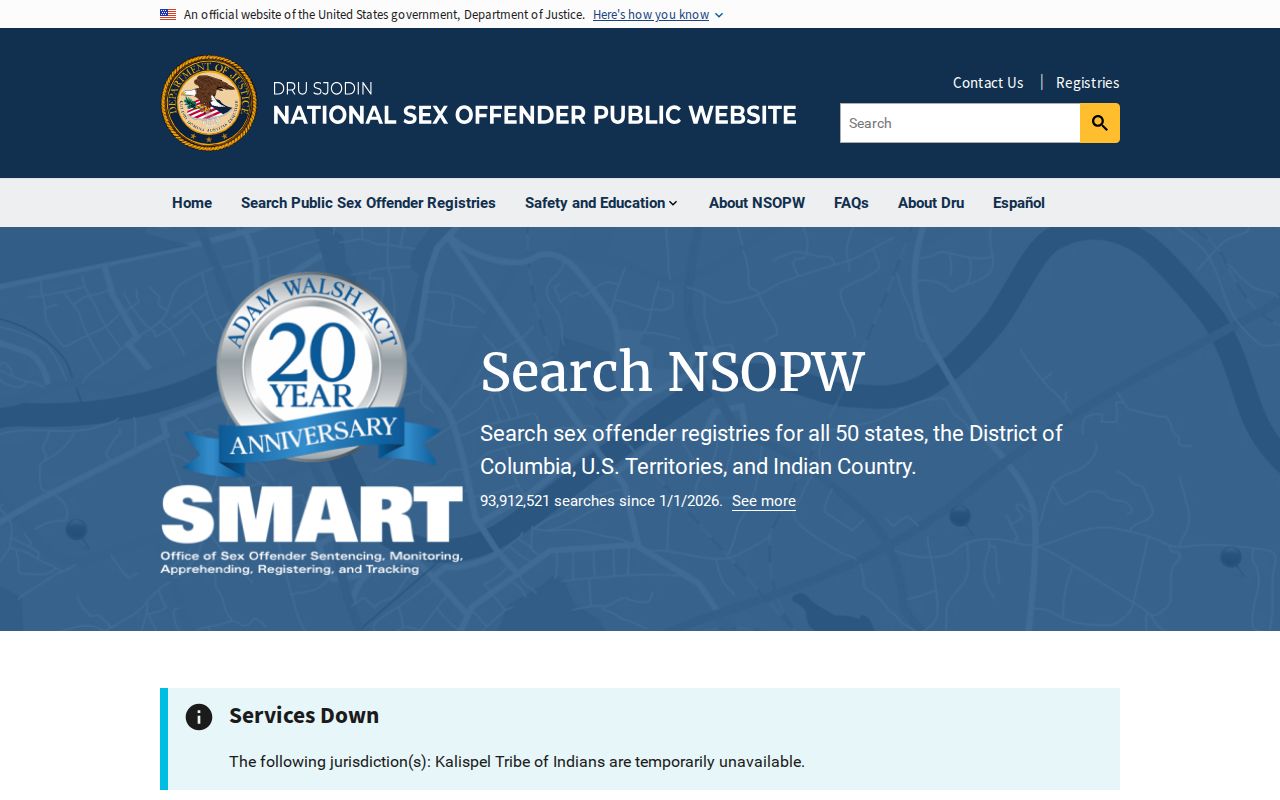
For border-area awareness, NSOPW broadens the map while each linked state registry remains the source for its own profile.
Inside a Registry Profile
A public Wichita County profile groups identity, location, offense, and registration facts. The research inventory found that a typical record may include aliases, a photograph, sex, race, age or date-of-birth information allowed for release, physical traits, scars or tattoos, a registered address, offense and statute details, a conviction or adjudication date, registration status, and other public data collected by law. Vehicle or institution information may appear when it is both collected and public.
| Name & Aliases | Published names used to help distinguish people and prior identities. |
|---|---|
| Photo & Description | Photograph plus public traits such as height, weight, hair, eyes, scars, marks, or tattoos. |
| Registered Address | The location made public under Texas registry rules, subject to the status and limits shown. |
| Offense & Statute | Reportable offense description, legal citation, and conviction or adjudication information. |
| Victim Category | Age-category information where Texas law authorizes public display. |
| Registration Status | Public status and verification or risk information that the current profile exposes. |
A profile is not a fresh finding of guilt. It reflects a registration duty tied to an earlier qualifying conviction or adjudication. Internal law-enforcement facts, protected victim information, and data outside public-release law should not be expected. Read the field labels as published, and do not fill a blank field with a guess.
Wichita County Registry Versus Court Cases
A registry entry and a criminal case record have different jobs. The registry tells the public about a current duty and the facts Texas permits DPS to release. A case file preserves the complaint or indictment, docket events, motions, plea or trial, judgment, sentence, and later orders. A profile may name the reportable offense, but it is not a full copy of the prosecution.
This Wichita County difference matters when a date, offense label, or status seems unclear. Do not read a registration update as a new arrest. Do not assume the Wichita County public profile contains every count from a judgment. A Wichita County court record may also involve a clerk other than the one a searcher first expects. District courts hold felony matters, County Courts at Law handle Class A and B misdemeanors, and municipal or justice courts keep fine-only cases.
Note: A registry record supports awareness; the originating judgment explains the offense and legal outcome in the source case.
Texas Registration Levels and Requirements
Texas duration rules should not be forced into a simple Tier I, Tier II, and Tier III chart. Code of Criminal Procedure Chapter 62 ties the duty to the reportable conviction or adjudication and to named statutory categories. Many specified sexually violent offenses and repeat reportable matters carry lifetime registration. Other qualifying offenses generally carry a Chapter 62 period after release or the end of supervision, often ten years. Juvenile duties and early termination have their own conditions.
The correct Wichita County duration comes from the statute that applies to the exact offense and case history. Verification frequency also depends on the governing Chapter 62 provisions and the person’s status. The official Wichita County material did not publish a complete local appointment or verification schedule, so a Wichita County searcher should not infer a check-in date from a generic online chart.
| Texas Framework | Duration | How to Verify |
|---|---|---|
| Specified sexually violent offenses | Many carry a lifetime duty | Match the exact offense to current Chapter 62. |
| Repeat reportable cases | Many carry a lifetime duty | Review the full reportable history under Chapter 62. |
| Other qualifying offenses | Often a defined post-release or post-supervision period, commonly ten years | Use the provision for the exact offense and judgment. |
| Juvenile or early-termination matters | Separate conditions apply | Read the applicable statutory route and court orders. |
The Texas Legislature publishes Chapter 62 as shown in the official source image below.
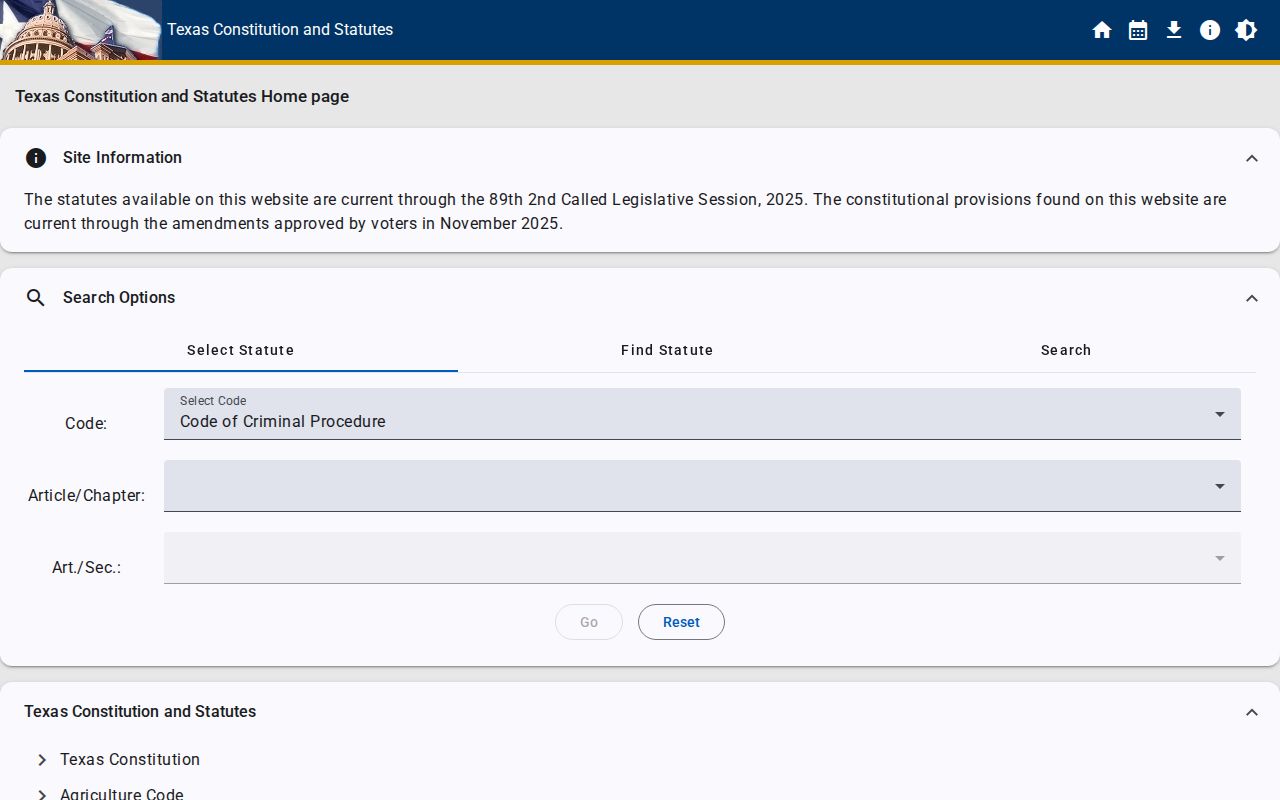
The statute, not a consumer tier label, controls both the existence and length of a Texas registration duty.
Wichita County Registry Contact
The Wichita County Sheriff’s Office is the local law-enforcement point for registration questions and reports of suspected noncompliance. Its headquarters is at the Law Enforcement Center, 2815 Central Freeway East, Wichita Falls, Texas 76302. The main number is 940-766-8170. The official material did not state registration-counter hours or appointment rules. Call before traveling, explain the type of registry issue, and ask which unit or time applies.
Wichita County Sheriff’s Office
Law Enforcement Center
2815 Central Freeway East
Wichita Falls, TX 76302
940-766-8170
Call first for registration-counter instructions.
For a possible violation, provide facts that law enforcement can assess, such as the location, date, and conduct observed. Do not confront the person, publish accusations, or attempt a compliance check. Call 911 when there is an immediate emergency. Otherwise, use the sheriff’s main line or the police agency with jurisdiction where the event occurred.
Report Wichita County Registry Concerns
A Wichita County profile can be wrong, stale, or misunderstood. First reopen the official record and confirm that the concern is tied to the correct person. Note the public status, registered location, and the precise fact that appears inconsistent. For a Wichita County registration question, contact WCSO. For conduct inside a city, the city police department may be the direct reporting channel. The agency, not a neighbor, decides whether the facts show noncompliance.
Keep reports factual. State what was seen, when, and where. Avoid claims about risk that the registry does not make. Registration data does not prove current criminal conduct, and a missing field does not show a violation. When the issue is merely a suspected page error, ask the responsible agency to review its source record rather than reposting the profile elsewhere.
Community Notification and Lawful Use
Public registry information exists for awareness and safety planning. It can help a household assess a route, confirm a nearby published address, or check across the Texas and Oklahoma line. Use the official profile and current warnings. Chapter 62 controls Texas registration duties and public information, while law enforcement handles compliance. A Wichita County registry result should never become an invitation to confront, shame, threaten, or harass a registrant or anyone in that person’s household.
Use Wichita County Registry Information Lawfully: Misusing Texas registry information to harass, threaten, intimidate, or take vigilante action can be a crime. Follow Texas Code of Criminal Procedure Chapter 62 warnings and report concerns to law enforcement.
Base safety steps on the record that is actually published. Verify a current address through the official portal, use NSOPW when the search crosses state lines, and let the proper agency investigate suspected violations. Responsible use protects the public value of Wichita County registry information without turning an old conviction or registration duty into an unsupported claim of new wrongdoing.